WORDBOX
Wordbox is a cross-platform language learning app that helps users collect vocabulary, explore meanings in depth, and reinforce knowledge through AI-powered features and exercises.
Wordbox started as a simple tool for collecting words. It evolved into a multi-functional AI learning product. As the sole designer, I shaped its structure, expanded its capabilities, and led UX/UI across web and mobile from MVP to launch.
Role
Sole Product Designer
Year
2025 - present
120+ screens
✦
3 platforms
✦
MVP → launch
THE STARTING POINT
When I joined the project, Wordbox already had a defined visual identity and a basic MVP. The original concept was simple: users create “Boxes” and store vocabulary inside them. The interaction was minimal and focused on collecting and reviewing words.
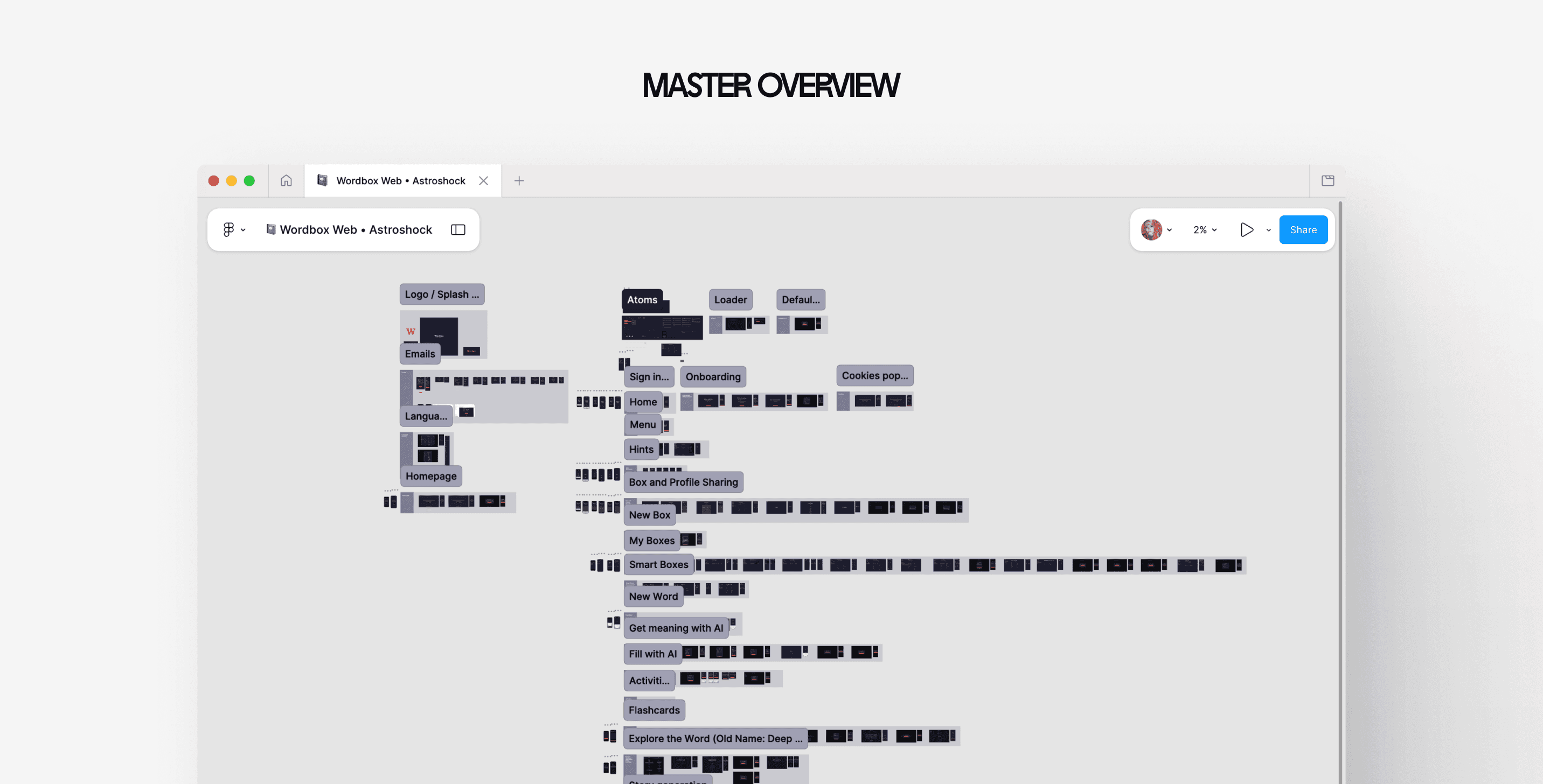
As new ideas emerged — especially AI-driven features — the product started to grow beyond its original scope. What was initially a lightweight word collection tool gradually transformed into a broader learning system. This shift required rethinking not just the interface, but the underlying product logic.
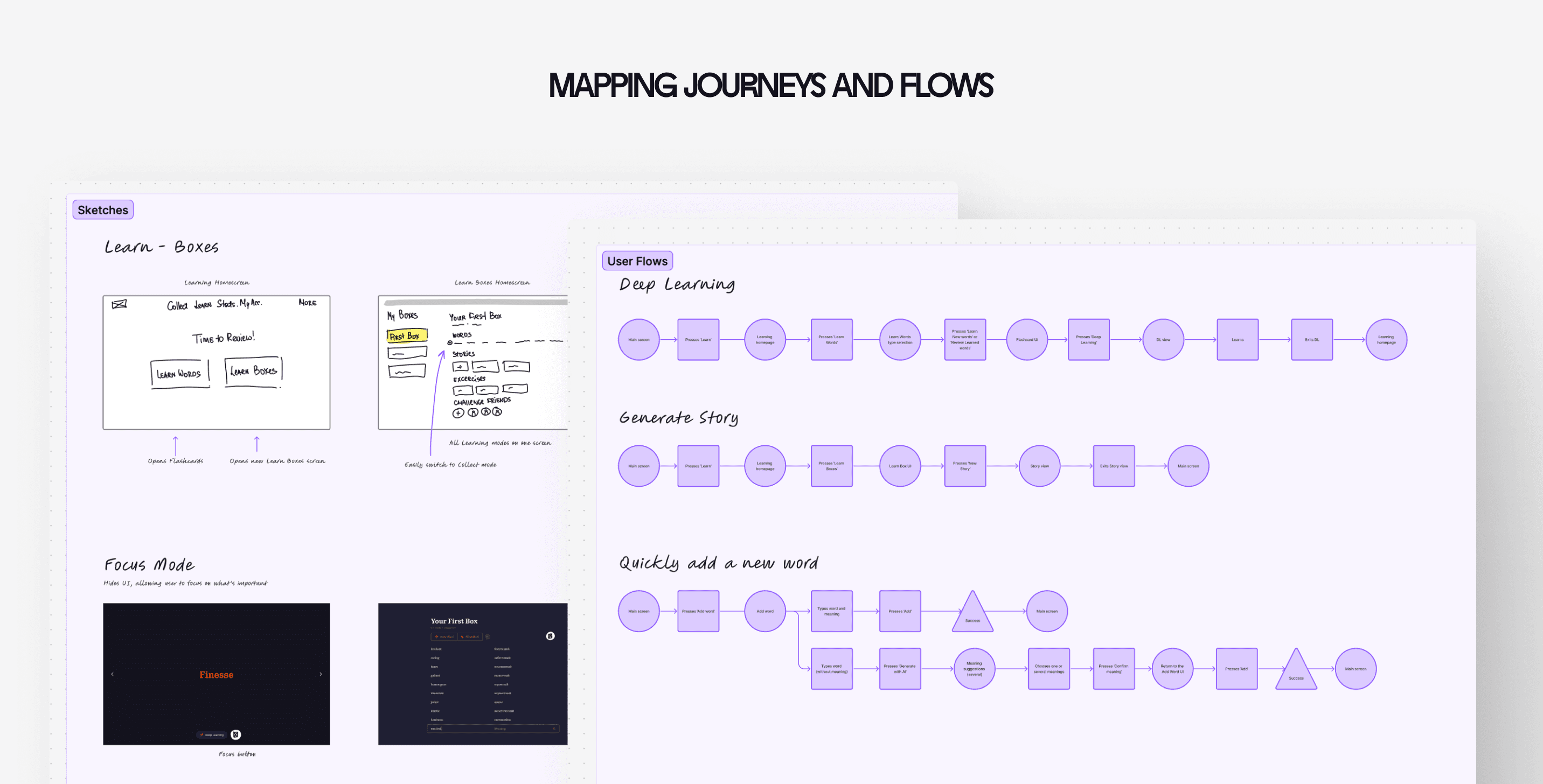
I worked closely with the CEO, who initiated most conceptual ideas, and collaborated with developers throughout implementation. As the only designer on the team, I was responsible for translating evolving concepts into coherent user flows and scalable interface decisions.


REDESIGNING THE BOX
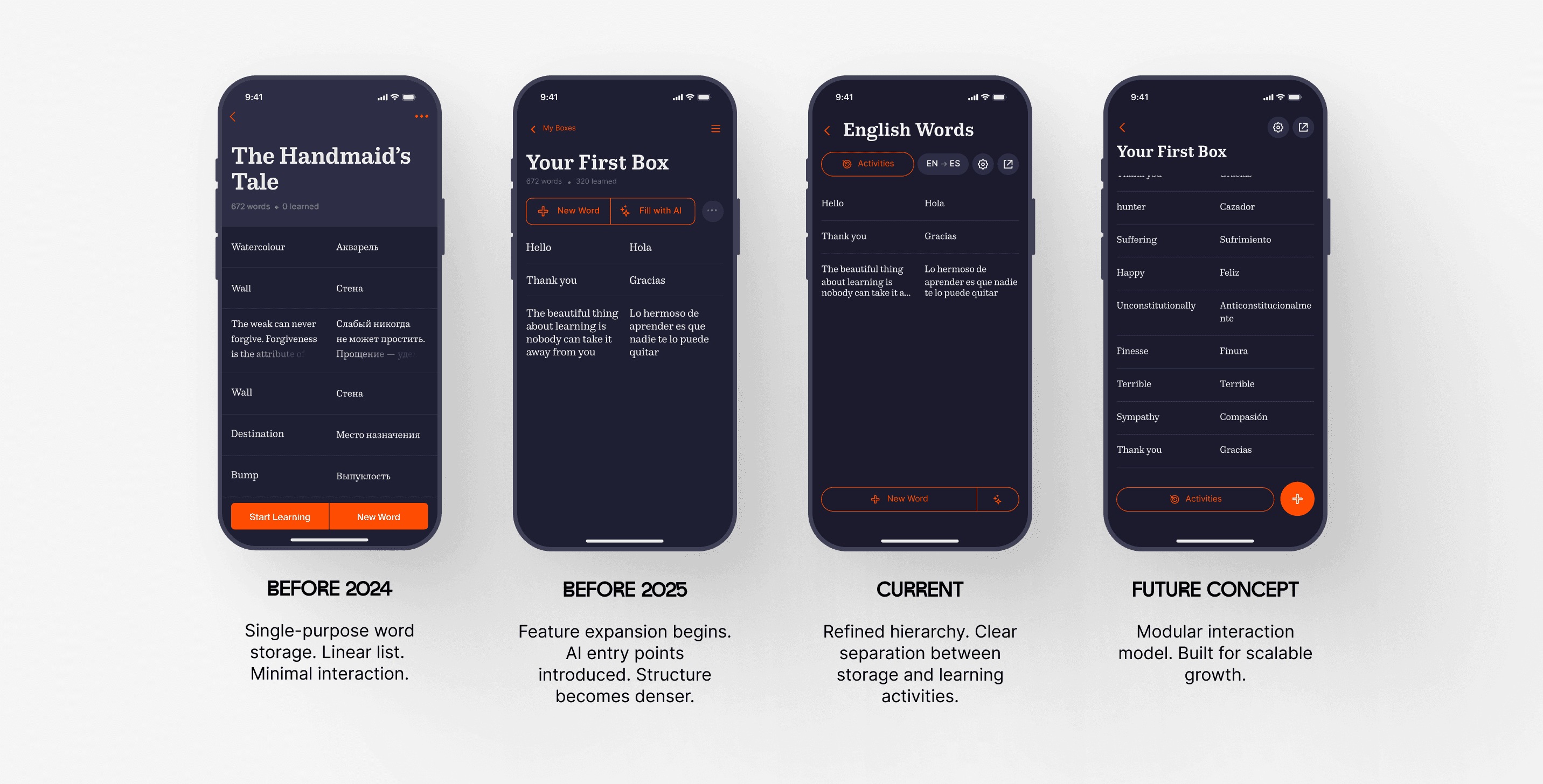
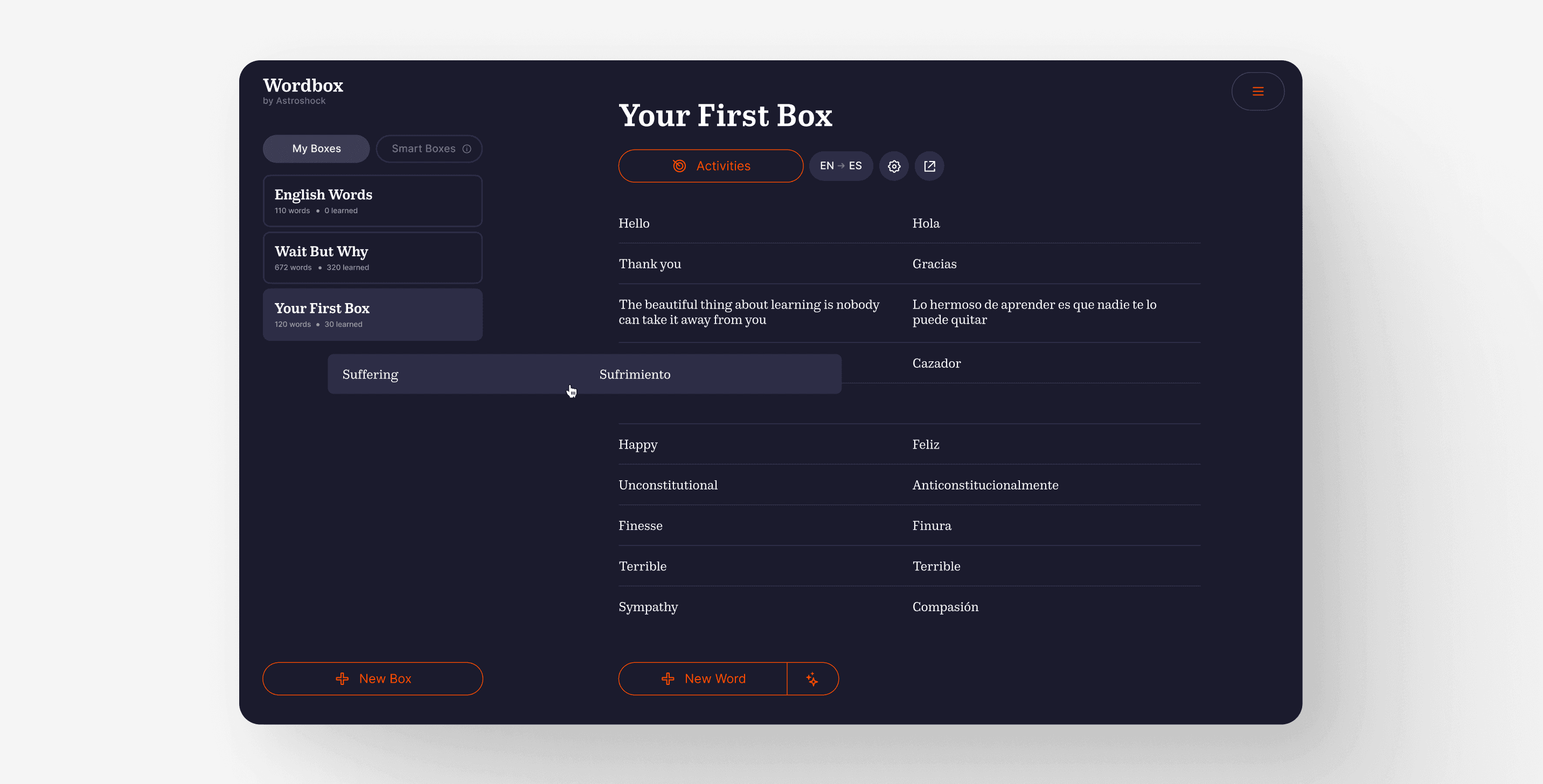
The “Box” is the central element of Wordbox. It’s where users store and interact with their words, so its structure defines the entire experience.
As functionality expanded, the Box became visually dense and harder to navigate. The interface was trying to communicate too much at once. The redesign focused on restoring hierarchy and reducing cognitive load while still supporting multiple interaction types.
I simplified the layout, clarified states, and refined spacing and typography to make the experience feel lighter without removing capability. The goal was not to make it visually minimal for aesthetic reasons, but to create space for future growth while keeping the interface understandable.
This redesign became the foundation for the rest of the product evolution.
INTEGRATING AI FEATURES
AI functionality introduced new UX challenges. Features like auto-filling boxes with generated words or exploring words more deeply required designing flows that users could trust and understand.
The ideation process was iterative and collaborative. The CEO would propose a concept, I would sketch interaction models and flows, and we would refine them together. After internal discussions, I would return with updated prototypes, and the cycle continued until the solution felt coherent.
One of the most important aspects was designing system states — loading, partial results, limits, and empty states. Working closely with developers, I adjusted flows multiple times to align design intent with technical realities.


DESIGN SYSTEM & SCALABILITY
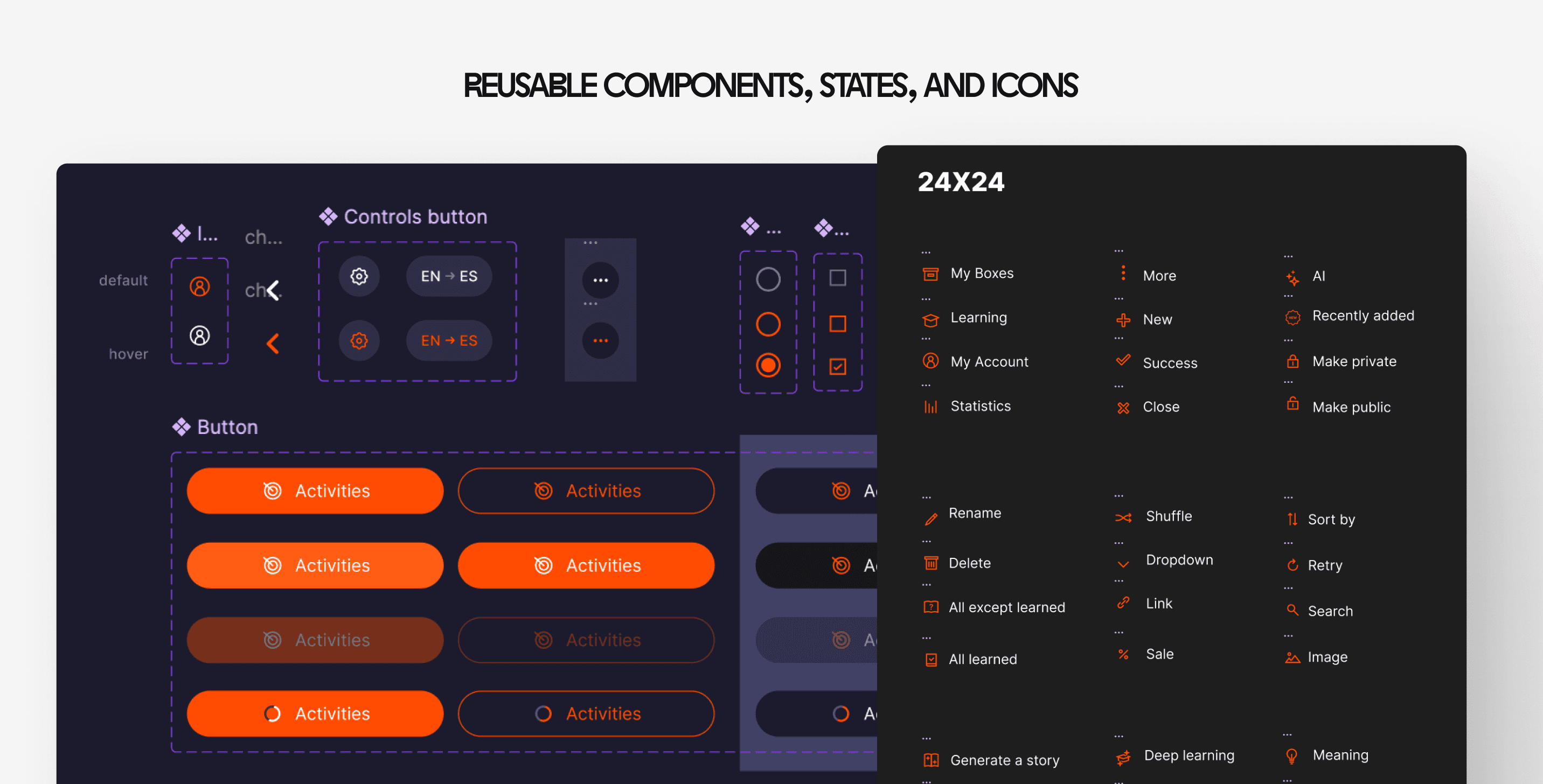
As the product grew, the original UI system started to feel restrictive. To support expansion across web and mobile, I refined the design system to improve consistency and scalability.
We updated button shapes and interaction states, increased contrast to improve accessibility, expanded the typography scale, and introduced desktop and mobile variants. These changes were not purely aesthetic — they allowed the interface to adapt more easily to new features and screen contexts.
Being the only designer meant maintaining coherence across platforms while continuously evolving the system. The goal was to ensure that growth would not lead to fragmentation.
ITERATION & LAUNCH
Wordbox is an early-stage product, so decisions were driven by iteration rather than formal research frameworks. Changes were informed by internal testing, early user feedback, and continuous refinement before and after release.
The product successfully launched on web, iOS, and Android, serving early adopters and establishing a scalable foundation for future development.
REFLECTION
Working on Wordbox meant designing a product that was constantly evolving. What began as a simple vocabulary tool gradually expanded into a more complex AI-enabled learning system.
As new features were introduced, the main challenge was managing growing complexity while keeping the experience clear and intuitive. Rather than layering new interfaces on top of the existing structure, I focused on refining the underlying product logic so the system could scale without becoming overwhelming.
Being the sole designer required balancing long-term product thinking with rapid iteration and close collaboration with developers. It meant continuously translating evolving ideas into clear user flows, interaction patterns, and a cohesive interface across platforms.
The project reinforced an approach to design that goes beyond individual screens — focusing instead on building systems that can grow, adapt, and remain understandable as the product evolves.